
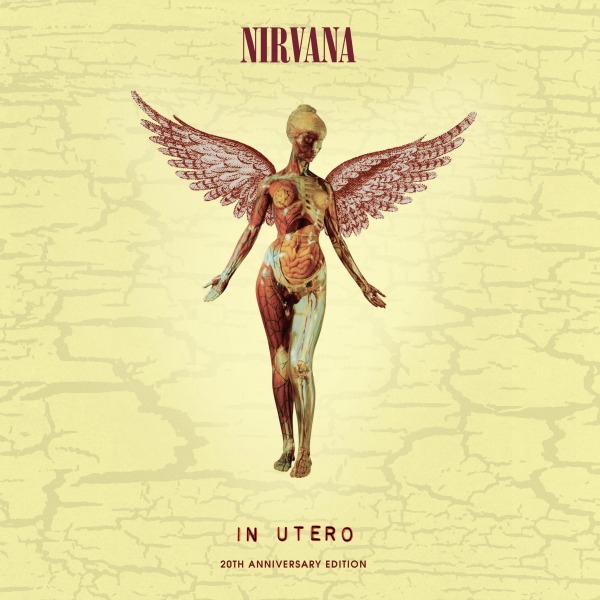
Quite a few artists in the genre of rock
get pinned with the adjective “seminal,” yet few are so universally recognized
as Nirvana. It wasn’t until about the age of twelve that I really found out who
Nirvana was, and everyone I encountered simply could not believe I had yet to
delve into their music. Thus, like many of my generation, I became engrossed in
Nirvana’s catalogue during their resurgence in popularity following release of
the With the Lights Out box set and
Kurt Cobain’s Journals. I got my
grubby teenaged hands on every release within my reach and immersed myself in
the mountain of music and literature surrounding this mythic group.
During this time, I remember being
caught up in the hype around this legendary act, sucking down biographies and
recordings with fervor. Most of my time was spent with their studio albums
(being both readily available and wholly celebrated), yet the one that received
the least attention was In Utero,
Nirvana’s final true studio release. Though I had spun it dozens of times, I
found the abrasive, feedback laden, brutally raw tracks to be frightening and
headache-inducing, and thus clung to the radio singles and abandoned the rest. Perhaps
my age stood in the way, for I could not know that in returning to that same
record ten years later, I would be addicted to those bleeding deep cuts that
once drove me back.
Though as a young boy I read and re-read
the saga of Nirvana’s rise and collapse, the artistic struggle to remain both
creative and credible was something I couldn’t truly fathom. Unfortunately for
fourteen-year-old me, unwavering commitment to that ideal is an integral factor
in the sound of In Utero. For their
third full length, Nirvana recruited producer and indie legend Steve Albini[1] in
hopes that he could assist them in creating a record devoid of the label
influence and over-production that had so overwhelmed Nevermind. Being that Albini had produced The Pixies’ Surfer Rosa,[2] a
band idol, they knew what they were getting into, and the result is as chaotic,
messy, and real as anyone could have hoped for. Kurt’s guitar screams through
his distortion pedal for most of the record, releasing melodic solos and
grating chords amidst horrifying squeals of feedback. Krist Novoselic’s bass
growls like a tank, and Dave Grohl’s drums hold more punch than a battery of
cannons.
In
Utero
invades the ears like an army of mastodons at first listen, but repeated
spinning shows that this record is much more than noise. Although Albini certainly
helped the band achieve the aggressive tone they’d been seeking, all of the pop-driven
songwriting which made Nirvana into a household name is still completely
captured in and complemented by this musical hurricane. Before the release of
the album, Cobain remarked that In Utero
was not an attempt at abandoning Nevermind
or its fans: “Let’s face it, we already sold out two and a half years ago.
There’s no sense in trying to redeem yourself by putting out an abrasive album
and pretending you’re a punk rocker again.”[3]
Thus, tunes
like “Heart-Shaped Box” and “All Apologies,” featuring clean guitar and soft
singing from Cobain, lay adjacent to punk monstrosities like “tourette’s” and
“Very Ape,” yet neither style really overshadows the other. Indeed, the vulnerability
that this band displays in some of its lighter tunes offers just as much definition
to In Utero as the thrash and bash
sound of the mix. The fact that Nirvana, while trying to make a record that is
untainted by corporate greed, still insists on imbuing their music with meaning
and melody shows that, even with ideals and anti-ideals in mind, this band’s
first mission remains making the music it wants to make.
One tune that captures Nirvana’s
well-worn and pop-driven side is “Dumb,” perhaps the tamest tune off of In Utero. Described as “Beatlesesque,”[4]
this track twists the provisional template of the production into a melodic
masterpiece that remains in rotation for many radio stations. Against the more
belligerent songs, “Dumb” stands out not only for its focus on gentility and
beauty, but also its uncharacteristically optimistic lyrical content. Although
the speaker appears unsure on his feet, he asserts, “I’m having fun”[5]
despite any obstacles that might land in front of him, whether they be darkness
or over-intoxication. The positive and calm energy of this tune contrasts
starkly with the punk fury around it, but it lacks for none of Nirvana’s
emotionally-laden energy, and remains one of my favorite Nirvana songs of all
time.
Due to its immediate catchiness and
mellow approach, “Dumb” is a bit of a black sheep on In Utero. The majority of the music on the record is both messy and
violent, and Kurt’s lyrical and vocal contributions are just as chaotic. He
spends half of the record guiding his vulnerable voice through skittish moaning
melodies, and the other forcing that voice into guttural, almost primitive
screams—his yells leading into the chorus of “Scentless Apprentice” are so loud
that the vocal track clips. While certainly entertaining, many of his lyrics
sink underneath his delivery, making them all but unintelligible. As for the
lyrics themselves, Kurt wavers between pop sensibility and punk rock rebellion,
offsetting his clichéd hooks with a plethora of sickness and death imagery. His
melodies provide the listener with unstoppable choruses that get lodged in the
head, but when built on refrains like “Sit and drink pennyroyal tea / distill
the life that’s inside of me” or the simply blatant “Rape me,” those melodies wriggle
like tapeworms swimming through the intestines.
While every song seems to have a general
theme or direction, the sparse wordwork and mild metaphor aren’t too conducive
to the movement of ideas; however, the songs work very well to convey universal
themes on the record, specifically the band’s reaction to the debacle of fame
they experienced two years earlier. After releasing a monster record like Nevermind, the bar for a follow-up
certainly must be ludicrous in its height, and the buzz surrounding that
venture is enough to drive most into madness, but Nirvana’s choice to deal with
said fame in the sarcastic composition of their new record is brilliant. Kurt
directly addresses the focus of the public on his life in “Serve the Servants” with
the line “That legendary divorce is such a bore,” and plays on their success
with an opening of “Teenaged angst has paid off well / Now I’m bored and old.”[6] In
“Frances Farmer Will Have Her Revenge on Seattle,” he laments the loss of the
innocent simplicity of being in a band, groaning his chorus line “I miss the
comfort in being sad.”[7] The
music itself also reacts to Nirvana’s stardom, as the band continually denies
the listener resolving notes at the end of their songs, letting them peter out
into feedback and moans rather than achieving a climactic close. The band
eschews conventions in popular music, playing on dissonant intervals and
unfiltered candor in their boredom with being idols, effectively giving the
music industry and anyone else who believes “Nirvana = Nevermind” a big middle finger.
For a record laden with derision and
indifference, no track offers more sarcasm than “Milk It.” This grueling and
boisterous tune features Nirvana purposefully avoiding almost anything that a
“Top-40” lover needs to enjoy music. The song begins with Kurt randomly picking
his guitar through gross intervals that feel intentionally wrong, before sidling
into an overdriven riff. Dave Grohl’s drumming deliberately misplaces the
downbeat, making it impossible to tap your foot along with the tune. Kurt moans
in the verses and almost vomits in the chorus, keeping his vocal sounds far
from pronounceable. This musical dumpster is capped with lyrics laden with
sickening imagery, as he hangs on the motif of parasites feeding off of the
least appetizing of human bodily fluids. The song seems a sardonic comment on
fame, an acknowledgement that an artist could sell absolute rubbish to its fans
if they have enough backing, as well as many musicians’ willingness to “milk”
stardom by putting no meaning or intention behind their art. While a commonly
addressed issue in the music world, Nirvana uses “Milk It” to put themselves
under the spotlight for this very issue, using a crass and sarcastic attitude
to respond to assertions that they fall under the umbrella of “soulless sellouts.”
Anyone who takes the risk of spinning In Utero can expect an overdose of
feedback and unbridled anger, but there is more than enough energy and melody
to turn the noise into meaningful music. Nirvana’s last record is one that
requires attention and thought, something a younger me couldn’t give, and that an older me is glad to apply. When examined in a thoughtful
and receptive fashion, even the radio hits that have pummeled alternative radio
for two decades become fresh and momentous. Thus, if you dare pick up In Utero, take the Nirvana you think you
know out of the equation, and judge it for what it is—you may find something
with which to fall in love.
1) tourette's
2) Milk It
3) Serve the Servants

